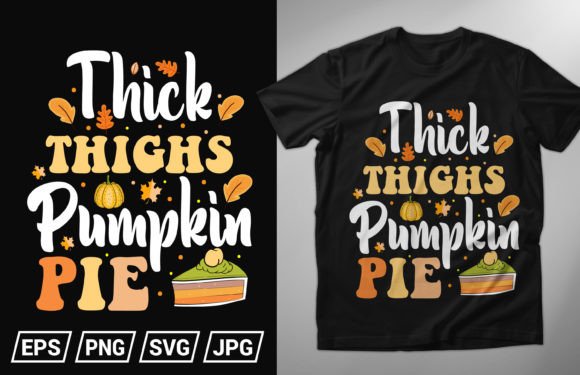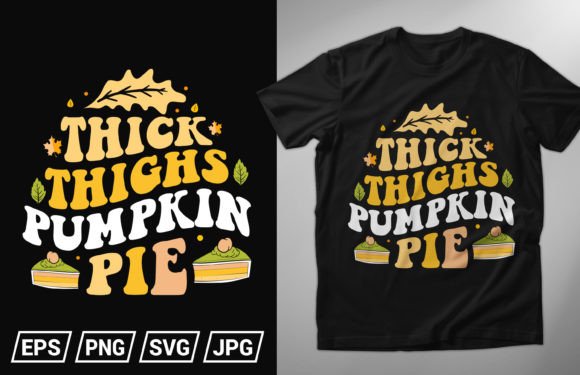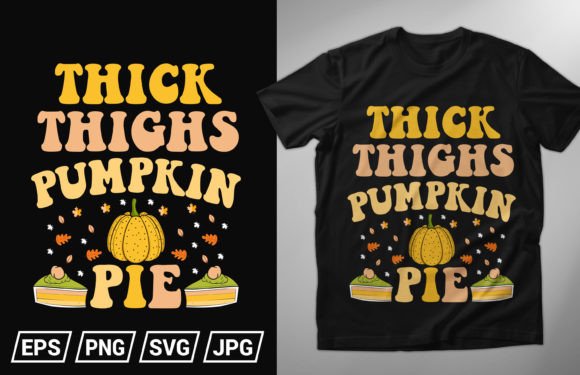
Thick Things Pumpkin Pies T Shirt Design
A Designer’s First Look: Warm, Whimsical, and Ready for Fall
When I opened the Thick Things Pumpkin Pies T Shirt Design, my first thought wasn’t “cute” — it was “cozy.” The illustration leans into rich autumnal charm: plump, slightly lopsided pumpkin pies with fluted crusts, gentle shading, and a hand-drawn warmth that avoids cartoonish exaggeration. It doesn’t scream “holiday sale” — it whispers “homemade pie cooling on the windowsill.” That subtle tone makes it unusually versatile for embroidery: not just a Thanksgiving T-shirt design, but a quiet anchor for handmade products where authenticity matters.
Where This Design Truly Shines in Real Embroidery Projects
I tested the Thick Things Pumpkin Pies T Shirt Design across three real-world items: a medium-weight cotton canvas tote bag, a 100% combed ring-spun sweatshirt, and a linen-blend kitchen towel. On all three, the design held up beautifully — especially because its visual weight comes from shape and silhouette, not fine linework or micro-details. The outer crust edges translate cleanly into satin stitch, while the pie filling reads well as a smooth fill stitch zone. No pixelation, no jagged curves — just confident, stitch-friendly contours.
This isn’t a design that fights the fabric. It breathes on structured surfaces like aprons and pillow covers, and it lands warmly on baby onesies (I used a lightweight tear-away stabilizer and reduced density slightly). For Etsy sellers and small shop owners, that adaptability is gold: one digital embroidery file can support your holiday tote collection, your boutique sweatshirt line, *and* your seasonal tea towel set — without needing separate versions.
Use With Care: Where Stitching Nuance Matters Most
That said, there are places where the Thick Things Pumpkin Pies T Shirt Design asks for thoughtful execution — not limitations, but awareness. On stretchy fabrics like ribbed knits or thin jersey tees, I recommend basting the hoop *before* stitching and using cutaway + topping stabilizer to keep the crust definition crisp. The curved edge of the pie crust relies on consistent satin stitch tension; on highly textured fabrics (think terry cloth towels or heavy fleece), test a small section first — you may want to add a light layer of water-soluble topping to lift stitches above the nap.
It’s also not ideal for tiny hoops under 4” x 4”. The design feels balanced at 4.5”–5.5” wide — enough room for the pie’s generous girth and legible lettering (“Pumpkin Pies”) without crowding. If you’re planning embroidered patches or cap fronts, check whether the original file includes a simplified version. The current graphics-based layout suggests it’s optimized for flat, centered placement — so curved surfaces like baseball caps will need careful digitizing adjustments or repositioning.
What Your Customers Will Notice (and Why It Builds Trust)
Here’s what stood out when I showed stitched samples to fellow makers and local boutique buyers: people didn’t say “nice embroidery.” They said, “That looks like something my aunt would bake *and* wear.” That emotional resonance — grounded, nostalgic, unhurried — elevates the finished product beyond decoration. It signals care. For craft businesses, that translates directly to perceived value: a $28 embroidered tote with this design feels intentional, not mass-produced. And because the theme is specific but not overly literal (no turkeys, no cornucopias), it avoids feeling dated by November 27th. You can use it through early December — even into January for cozy “leftover pie” gifting.
Practical Notes Every Embroidery Designer Should Run Through
- Always test on scrap fabric first — especially if switching between light/dark backgrounds. The contrast between crust and filling holds up well, but thread color choice changes everything.
- Review stitch density before running full production. Some versions of this design lean dense in the crust area — reduce by 5–10% if embroidering on delicate cotton or baby items.
- Confirm hoop size compatibility. Since the product description mentions a ZIP file but no dimensions, measure the design in your software before hooping.
- Inspect small details: the crimped edge of the pie crust and subtle shadow beneath the slice rely on clean stitch transitions. Zoom in — look for stray jumps or overlapping runs.
- Test black-and-white mockups. This design works strongly in monochrome — useful for branding consistency across social media or printed tags.
- Check licensing terms carefully. As a commercial embroidery designer, I need to know whether this machine embroidery design permits resale of finished goods — and whether derivative designs (e.g., adding a name or date) are allowed. The store description hints at “premium resources to grow your business,” but verify before listing on Etsy or wholesale platforms.
Final Thought: A Thoughtful Anchor for Seasonal Craft Business
The Thick Things Pumpkin Pies T Shirt Design isn’t flashy — and that’s its strength. In a landscape full of over-digitized, hyper-saturated holiday graphics, it offers breathing room. It supports slow-making, intentional gifting, and small-batch storytelling. Whether you’re stitching personalized baby blankets for new parents, building a curated line of fall-themed kitchen textiles, or designing embroidered patches for a local bakery’s staff uniforms, this design arrives ready to serve — not distract. It’s the kind of embroidery file that makes customers pause, smile, and ask, “Where did you get that?” — which, for any craft business, is the best kind of marketing there is.