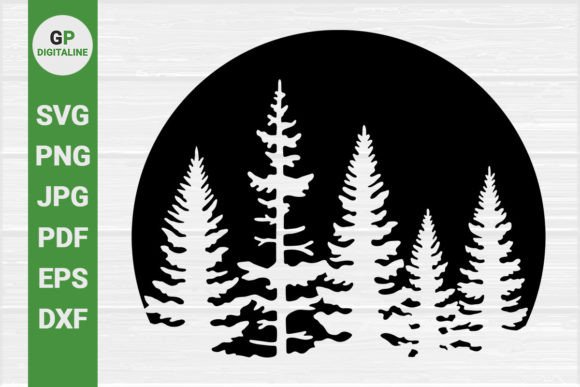
Pine Trees in a Circle, Forest SVG Graphics
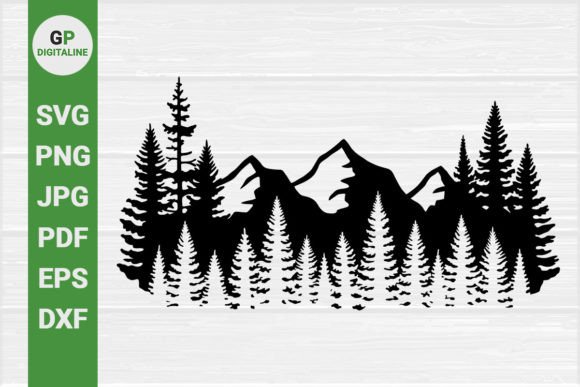
As a graphic designer who’s built brand identities for over a dozen handmade businesses—from artisanal candle makers to forest-themed wedding stationery lines—I opened Pine Trees in a Circle, Forest SVG expecting another generic silhouette pack. What I found was a quietly intentional illustration: clean but organic, balanced but not sterile, with subtle asymmetry in the pine forms and thoughtful negative space inside the circular frame. It reads as woodland—not wilderness—evoking calm, groundedness, and quiet celebration of nature. That nuance matters when your client is launching a small-batch apothecary line or designing seasonal packaging for a local farmers’ market vendor.
A Design Asset That Anchors, Not Distracts
This isn’t a standalone logo—it’s a supporting visual anchor. In a recent project for a Portland-based herbal tea brand, we used Pine Trees in a Circle, Forest SVG as a recurring motif across product labels, Instagram story highlights, and printable gift tags. Its circular composition naturally frames product photography in mockups and creates rhythm in layout grids without competing with typography. The silhouette style ensures it scales beautifully from 2-inch sticker die-cuts to 48-inch trade show banners—no pixelation, no jagged edges. Because it’s delivered as an SVG cut file alongside PNG, JPG, PDF, DXF, EPS, and Cricut-ready formats, it moved seamlessly into our production pipeline: vector for label printing, transparent PNG for web graphics, DXF for laser-cut wooden packaging inserts.
Where It Elevates Real Client Work
- Brand identity systems: Paired with warm serif fonts (like Playfair Display) or soft sans serifs (such as Quicksand), it adds warmth and craft without sacrificing polish—ideal for small business branding that values authenticity over trend-chasing.
- Packaging design: Works especially well on kraft paper, matte-finish stickers, or linen-textured boxes. We placed it subtly in the bottom corner of a tea tin label—small enough to feel like a signature, large enough to read as intentional.
- Social media graphics: Serves as a consistent visual thread across Pinterest pins, Instagram carousels, and Canva templates—especially effective in earth-toned palettes or monochrome variations.
- Cricut projects & printable design: The clean vector paths cut precisely on vinyl and cardstock; we’ve used it in layered greeting cards and seasonal wall art bundles sold on Etsy.
- Editorial and web design: Functions as a decorative divider, section header icon, or background texture when lightly desaturated and repeated at low opacity.
Where Caution Is Required
Pine Trees in a Circle, Forest SVG doesn’t thrive in every context—and that’s part of its strength. Avoid using it where clarity trumps atmosphere: small app icons, corporate annual reports, or minimalist tech branding where visual hierarchy must be razor-sharp. Its organic shape loses definition below 16px, and on busy photographic backgrounds or low-contrast gradients, the silhouette can visually “disappear.” It also doesn’t pair well with ultra-thin display fonts or rigid geometric logos—it needs breathing room and complementary warmth. For print-on-demand sellers, test it on dark apparel first: while the black version prints cleanly on navy or charcoal, lighter greys may require a white underbase.
Designer Notes You’ll Actually Use
- Test it in pure black and white—no color—to confirm contrast integrity across mediums.
- Preview at three sizes: thumbnail (for social feeds), mid-size (product mockups), and full bleed (wall art)—some silhouettes tighten or loosen unexpectedly at scale.
- Drop it onto real packaging mockups—not just flat previews—to assess how it interacts with material texture and lighting.
- Inspect the PNG: does transparency render cleanly? Are there stray pixels or anti-aliasing halos? (This one passed—crisp edges, no fringing.)
- Open the SVG in Illustrator: are layers named? Are paths grouped logically? (Yes—the pines are grouped by quadrant, making selective recoloring efficient.)
- Compare it against font pairings: it harmonizes with script fonts for invitation suites, sans serifs for modern labels, and handwritten styles for rustic merchandise—but clashes with ultra-bold condensed type.
- Verify commercial license terms before adding it to any client deliverable—this asset includes full commercial rights, which is essential for digital product, sublimation design, and print-on-demand use.
Why It Fits the Creative Marketplace—Thoughtfully
In a sea of overdesigned clipart and AI-generated “nature” assets, Pine Trees in a Circle, Forest SVG stands out because it feels hand-conceived—not algorithmically assembled. The slight variation in tree height, the gentle curve of the outer circle, and the deliberate spacing between trunks suggest human judgment. That translates directly to audience perception: clients report higher engagement on posts featuring this illustration versus generic pine clipart, likely because viewers subconsciously register its authenticity. For Etsy sellers and handmade businesses, that emotional resonance builds trust faster than stock alternatives. And for designers building scalable brand systems, its versatility across SVG, PNG, and PDF means one purchase supports everything from t-shirt design to editorial layouts to Cricut project kits—without licensing friction or format-switching headaches.
A Final Word for Professional Use
If you’re sourcing a graphic design asset to support a real client launch—whether it’s a holiday product line, a wellness brand refresh, or a local event campaign—Pine Trees in a Circle, Forest SVG earns its place in your working toolkit. It’s not flashy. It won’t go viral on its own. But it performs reliably, communicates clearly, and adds quiet sophistication to commercial design, packaging design, and social media graphics. Just remember: great illustrations don’t shout—they settle in, support the message, and make the whole composition feel considered. This one does.